Chopping down Louisiana’s forests to meet Europe’s energy goals

Humanity’s original vocation in Scripture (never rescinded) is to steward God’s property, the planet. As a can’t-get-enough hunter and fisher, backpacker, gardener and all around nature lover, I’ve always been interested in our world’s biomes and their health. It’s one of the reasons I did an MA in International Development.

Western Europe wants green energy. Good so far. They’ve decided wood pellets are green. They call it “biomass energy.” Problem: Western Europe doesn’t have jack for forests. So they’re getting their wood pellets from the southeast USA. 2.5 million tons in 2008, which jumped to 9 million tons in 2012. They want 20 million tons annually by 2020. That 20 million tons annually is planned to come primarily from the US and Canada.

That’s a lot of clearcutting.

And as far as following established limits, in 2008 activist Dean Wilson traced bags of cypress mulch at Walmart and Home Depot labeled “sustainably harvested” back to the Atchafalaya Basin. The Basin’s cypress swamps serve as a hurricane-absorber for the coast, and are a refuge for all manner of wildlife. Due to the past, when Big Business says cypress aren’t being cut down, environmentalists are leery to believe it again. Plus, clear –cut areas can rejuvenate, but the biome for wildlife is catastrophically altered overnight, and the hurricane-mitigating abilities are wiped out until it grows back.

One questions is, how “carbon neutral” are wood pellets when used on this kind of scale?

Well, eventually, when the trees grow back, but it’s the next 50 to 100 years environmentalists are VERY worried about in terms of carbon in the atmosphere. It’s the tipping-point effects of the carbon affecting the planet’s temperature that we are concerned about now, not when the trees are sucking carbon at the rate they are now, 60 to 80 years from now.  For example, get the Ross Ice Shelf sliding faster off the Antarctic land mass than it already is… well, if that baby hits the water in one big slide, expect sea levels to go up at least 3 meters immediately. Result? Among other things, several billion people as refugees around the world, and US Senators will lose their beachfront homes.

To a large number of  American evangelicals, many of whom expect the Second Coming any minute since President Obama won a second term and their kids listen to rock music, the whole global warming/climate change discussion is a conspiracy for communists, the UN, or the Anti-Christ (or all 3) to take over the world. As a result, they’ve opted out of any serious engagement in the climate change issue, citing that they still love nature “I like going to the lake as much as the next guy…”

But for those of us Christians concerned about environmental issues, as for the wood pellets in Europe:  Is this an example of what we want to call ‘green’?

You can read the story here:
http://america.aljazeera.com/articles/2014/1/16/green-energy-demandineuropemaybethreateningamericanforests.html

Very Happy for Rob Bell

So my postmodern, emergent, half-hippie son was home for the holidays with his fiancée and since he keeps up with such things, he knew that pastor/writer sensation Rob Bell was airing the first episode of his new TV show on the Oprah Network. (The fact that I just actually typed the words ‘Oprah Network’ is strange in the extreme to me.) So, he says to us, back over Christmas break, “The new Rob Bell show is on tonight!” So there we were taking it all in.

And I am very happy for Rob Bell. How good it was to see him doing something he is so good at, and obviously enjoys. The show is like a long, extended Nooma video: Rob doing what he does best, talking to people creatively and in ways that resonate, about the deepest longings and pain in their lives, and how God comes into all that. I am delighted to see him doing something like this with his time.

Those who hate him, vilify him and thrill to the word “heretic” will, I am sure, expend lots of valuable Kingdom time talking about how horrible he is. Despite the fact that the only identifiable moment in the hour in which a self-appointed heretic hunter could possibly cry about was when Rob spoke about ‘the Universe wanting you to be whole’, instead of saying “God” or “Jesus,” I am confident people will delight in finding tons of things to count as awful heresy or motive throughout his show. It’s so overboard and boring to hear people go on about how awful he is, it’s ridiculous.

But in terms of “the universe,” the Wisdom literature explores personified wisdom at God’s side during creation delighting in His work and in mankind. Wisdom is the power through which God makes the Universe, according to extended passages in the Proverbs; what the Greek philosophers called the underlying rational principle of the cosmos, the divine logos. Both John and Paul described Jesus as precisely this – the logos, through which the universe was created and in whom all things cohere, hold together, sustaining the universe’s existence, the very wisdom of God. If John had any idea what the meaning of the word logos meant, the underlying principle in the universe, which can be connected to and conformed to, then it is indeed accurate, in a way, to say ‘the Universe’ wants you to be whole. Or, at least to say ‘the underlying principle the universe is held together with… wants you to be whole.’

Cheers, Rob.

Structuration and Christian Theology PART THREE

CS Lewis said this about scientific theories – once enough externalities (he didn’t use the word, but it means things unexplained by the current theory) pile up so high that the current theory can’t sustain the weight, people go hunting a new theory that will be able to carry the freight of the externalities. It’s not, Lewis argued, that the new theory is actually more true than the old theory, but it serves the questions or discoveries of the current generation better in explaining what they see.

I think what Lewis said about scientific theory is also true about theology. That’s why it changes.

I believe God’s Spirit at work in this interplay, responding to the ways human society develops in its freedom. It’s a much more  “responsive” picture of God’s interaction in His world, rather than a controlling, deterministic one. (This kind of picture of God  doesn’t mean God doesn’t intend to do some things He said He will do, but it looks more to kairos moments rather than chronos pre-scheduled ones). So, a Structuration look at theology would say: as human societies have developed and advanced they have developed their theology to keep up. It’s a parallel view to progressive revelation’s view of the Bible wherein the Mosiac Law gives a deeper understanding of God than Abraham had, which is in turn deepened by the relational insights of the Psalms, developed further –with a deeper level morality – by the Prophets, and finally revealed far, far more accurately in the “mirror image of the Father,” Jesus. Just as the view of progressive revelation says God revealed more of His nature (or the Israelites came to understand more) as time went by across the pages of the Old Testament, and finally most definitely in Jesus, so in Structuration theory we would say our theology understands more about what God is like as time goes by, or at least apply what we know better to our century’s specific issues.

As to the question: “is our theology getting better, more accurate?” Well, in certain areas, hopefully. For example, I do believe that our theology that “Slavery is bad. Period.” is better than theological systems that allowed for slavery. We have a better theology of slavery than the Bible does. Period. Does anyone want to argue that?  We have worked out the implications of the  Bible’s theology of women further than the people in the Bible did.

However, in general, although the development and survival of societies should typically tend to direct their theology in ways that promote well-being, (as I think has happened for both women and slavery), as Lewis said about scientific theory, I don’t know that our theology is necessarily always truer than former ones, but it serves the current generation in more wholesome ways than ones from eras which no longer work, no longer answer pressing questions we have before us. Theology will continue to morph and change in ways, hopefully true to the Gospel, but also answering the questions of each generation in meaningful ways, as time goes on.  Christians with a huge variety of theology have been in love with God and trying their best to do what Jesus says to, for 20 centuries. This is why changes in theology don’t bother me overmuch.

Structuration Theory and Theology PART TWO: the water and the stones

In the last post I described the sociology theory “Structuration” and how I compare its view (of the development of human societies) to water in a streambed flowing among stones – both the water and the stones mutually affecting each other. I was talking about this because I suspect the history of change in Christian theology is also a story of Structuration.

Christians I know tend to have a variety of ideas about changes in theology. Some see change as a watering down of the clear, Divinely-inspired teaching of the Bible; as in, people change theology to suit their whims instead of obeying what God has said. I don’t think that accurately describes the development of Christian doctrine down through the centuries, and certainly doesn’t reflect how a doctrine like, say, the Atonement, has undergone change. People who take this approach are well-meaning I am sure, but I don’t think their understanding of the history of Christian thought is very robust.

Others see it more in terms of progressive revelation; as in, God is helping us slowly develop better and better theology as the centuries unfold. This sounds encouraging, though we have to admit it’s pretty us-focused, self-serving, and naïve concerning the negative effects much theology has.

Some see it as simply a matter of applying the correct scientific methods of interpreting the Scriptures, and whoever does the best work is the one who is correct. Thus the exegetical wars between Wesleyans and Calvinists, etc. etc., ad nauseum.  I think history has shown these wars of textual minutia to be unwinnable, with a large swath of bombed-out territory in between the trenches, littered with lots and lots of human casualties that too many of the weapons-designers don’t get out to see.

I suspect that the truth about changes in theology is a lot like Structuration theory’s explanation of change in human societies. The traditions, beliefs and worldviews a person grows up with shapes their view of theology, (and their understanding of what the Scriptures mean, and which Scriptures are more important than others). But then again, that person’s unique thought processes interpret what they see in the world around them in ways that are possible to break beyond the bounds of the prevailing thought around them – thus pushing the stream of water flow in a different direction, in a minor – or sometimes major – shift. These changes in perspective in theology are often in response to discoveries or new thought in other realms – biology, physics, archeology, humanities, etc. But it’s not one-way, because the prevailing theology/worldview shapes the assumptions those scientists come to their work with as well. Thus I think history shows that the human society and its prevailing thought systems (and new discoveries) affects theology’s development, and theology affects the society as well, in an on-going interplay.  Easy example: when we discover the earth goes ‘round the sun, instead of the sun going ‘round the earth, it’s hard to stick with a theology – and an exegetical method – that says the sun goes ‘round the earth.  There’s a lot more to be said about this. Our theologies have changed in all kinds of ways down through the centuries because of things we’ve learned in science, or because of our consciences. More on structuration theory and theology in the next post.

Today is the fifth day of Christmas Season in the Christian calendar. So it’s not too late for me to sincerely wish you: Merry Christmas.

Structuration theory and Christian theology; Like Water Flowing Around Stones

Structuration is a theory, conceived by sociologist Anthony Gibbens, utilized in community development studies to describe how societies or cultures change, develop and evolve. It takes the view that traditions, norms and the institutions that embody them (the “structures”) shape people (the “agents”), but then again people shape those structures, in an on-going feedback loop/ Coriolis spiral of symbiotic, fluid, interplay.  It serves as sort of a macro-level, umbrella theory that encompasses many of the other theories of community development (all of which are noticeably true, it seems, in at least some ways, but incomplete in the bigger picture). In structuration theory you can’t point to just one element and say “that’s why societies change.” There’s something more complex going on.

I like to picture it as water in a stream flowing around stones.

Picture a stream flowing around stones. Close your eyes. Let out a deep breath. Feeling more peaceful already, aren’t you? I know, I know, I’m wonderful.

Anyway, the stream flowing around stones is a picture of Structuration theory. The traditions, beliefs and practices of society (also organized into institutions) are the stones (“structures”) and the water is the people (“agents”). Notice how the stones shape the direction of the water, here a boulder divides the stream, over there the ledge pushes the flow into a bend, down a ways the field of round stones causes a small rapid. However, the water shapes the stones too.  The water moves the stones around, wears them into new shapes, even, as happened here during a hurricane, moves the course of the stream completely out of the riverbed and carves something new (the Russian revolution of 1917 or the American one of 1776 would be examples  of this).  In the same way, in Structuration theory structures and agents are seen to mutually shape each other – a duality of affecting forces. Neither has priority over the other.

While more specific analyses of communities are necessary in order to avoid partial and/or too vague conclusions, a strength of Structuration theory is it’s etic, get-out-of-your-fishbowl, big picture overview. The reason I am talking about this is that I suspect Structuration theory accurately describes how Christian theology works, and has developed down through the centuries. We can get to that in the next post.

Working our way backwards to, not forward from, the Virgin Birth

When I’m drinking coffee with someone poking around on the edges of Christian faith, one of the things that sometimes comes up (especially this time of year), is serious doubt about the Virgin Birth. I’ve come to the spot where I no longer try to convince people of the Virgin Birth, rather I think it’s a doctrine we work our way backwards to; after discovering more and more what God is like in our own lives, it becomes easier to believe this God could and would do something like a Virgin Birth. Trying to get someone over the intellectual hurdle of the Virgin Birth before they can exert some faith in Christ seems to me, after 20+ years of full time pastoral experience, to be going about this from the wrong direction. I don’t know anyone under the age 50 who ever came to faith by saying “Well, since the Bible says Jesus was born of a virgin, he must be God!” That would be to suppose that people already assume the Bible is true, something by no means the case today.

So the conversation for me often looks something like this: First, I don’t follow Jesus or believe in the Creator God because of the truth or untruth of a doctrine like the Virgin Birth. Even if it turned out that the Virgin Birth was just a way Matthew and Luke were saying  Jesus was from God but not to be taken literally (though I think there are strong historical reasons why neither of them would want to write anything like the Virgin Birth narrative unless they believed it to be utterly and literally true – far too risky considering the easy comparison to Greco-Roman mythology – both of these men were demonstrably very smart thinkers; and no one, as far as we can tell, in the 400 years from Isaiah to Matthew, ever put together the idea of Immanuel and the Messiah until Matthew himself does – so it isn’t a case of text-proofing), I would still follow Jesus for all the reasons I believe doing so is the smart human option. I don’t do it due to his birth circumstances.

Second, after we “taste and see that the Lord is good,” after we get an experience little by little of what living the way of Jesus is like, and experiencing the strange and new experience of having His Spirit at work in our hearts and minds, we start to find ourselves trusting His way (and Himself!) more and more. As our based-on-experience time accumulates and we watch things happen in life that we have a hard time explaining outside of God, we become more and more aware that there are things God is doing in our lives supernaturally. We see situations change, prayer affect peoples’ hearts, hard-to-explain healings, and other things occur to the extent that we begin to find it easier and easier to believe that the God working in Jesus really did heal people (no one in that generation ever claimed he didn’t – they just accused him of black magic), and from there it becomes easier to believe that this God would do something extraordinary like a Virgin Birth, as well. When you’ve experienced the presence of God working in your own life more and more, and found yourself changing as a result in ways that delight you, when you’ve seen miracles occur, it becomes easier and easier to reason your way backwards then, to something like the Virgin Birth.

“Until then,” I usually say, “I wouldn’t worry overmuch about the Virgin Birth. I don’t mind if you believe it or not. I’m not saying disregard it, I don’t believe in intellectual dishonesty – it always backfires. But maybe it’s a subject you can always come back to, anytime you want. Right now, I’d suggest you set it off to the side for the moment.  At this point in your life, there may be more compelling reasons to consider trying out the way of Jesus. And you may find that the results shed new light on this whole question.”

To me. this approach makes the Virgin Birth a doctrine we work our way backwards to, rather than forwards from.

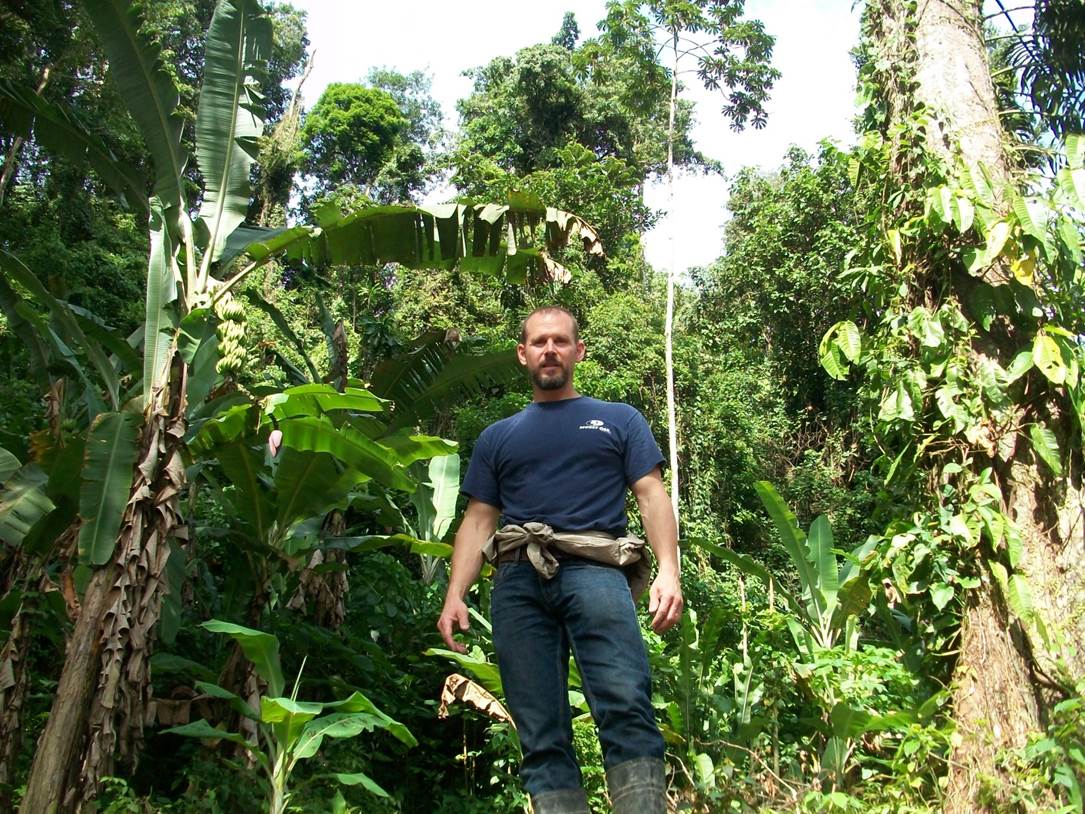
In the jungles of Costa Rica

cabecar jungle


So I’ve been AWOL for a month here, in a flurry of activity that has kept me largely away from my computer and for sure away from doing things like blogging. One of the best of these activities, in a month packed with fun, (Thanksgiving, deer hunting, etc), was a week long trip to Costa Rica, where I found myself climbing mountains in the jungle on a remote Indian Reservation doing a feasibility study for development work for an inter-agency cooperation.

From 2012-2014 I did an MA in International Development at Eastern University in St. Davids, PA at Eastern’s  (Tony) Campolo School of Leadership and Development. As a pastor, I’ve always believed in putting your money where your mouth is, and a degree in development would, I hoped, help me comprehend better how to do good work in the under-developed world, instead of blundering through with good intentions.  It was great fun and very stimulating and put me with an incredible group of people I am blessed to call friends. One of the organizations looking at development work among the Native Americans in Costa Rica knew me and asked me to come along on an assessment trip as their ‘development specialist.’ An all-expenses-paid chance to hike around in the jungle and maybe even do some good? Easy choice.  My folks paid for our 17 year old son to come along as a student observer and that made it even better.

So it was pretty sweet, interviewing folks all over, taking a look at their water and sanitation issues, and education, health services and infrastructure needs. We spent three days in the jungle and the next three days hammering out reports and sitting in long, long meetings. All in all, it was dream work. The dream job. I’m grateful to belong to a denomination with a vision for transformation of not only peoples’ spiritual lives, but all of their existence, in culturally appropriate, missiologically and anthropologically sound ways.

Brad Pailsey and LLCool J’s ‘Accidental Racist’

A couple years ago country singer/songwriter (and phenomenal guitarist) Brad Paisley got together with rapper/actor LL Cool J and released a song “Accidental Racist” on Paisely’s album ‘Wheelhouse’ (Arista Nashville, 2013). Paisely drew a fair amount of criticism for the song, citing it was too meager a response to a subject as complex and substantial as race relations in the U.S. For my own part, I found the song to be a fabulous contribution. You have to start somewhere, and a country western singer teaming up with a rapper provides a venue to speak from that activists, preachers and politicians don’t enjoy. Thank you, James and Brad.


 “Accidental Racist”

(feat. Ll Cool J)

To the man that waited on me at the Starbucks down on Main, I hope you understand
When I put on that t-shirt, the only thing I meant to say is I’m a Skynyrd fan
The red flag on my chest somehow is like the elephant in the corner of the south
And I just walked him right in the room
Just a proud rebel son with an ‘ol can of worms
Lookin’ like I got a lot to learn but from my point of view

I’m just a white man comin’ to you from the southland
Tryin’ to understand what it’s like not to be
I’m proud of where I’m from, but not everything we’ve done
And it ain’t like you and me can re-write history
Our generation didn’t start this nation
We’re still pickin’ up the pieces, walkin’ on eggshells, fightin’ over yesterday
And caught between southern pride and southern blame

They called it Reconstruction, fixed the buildings, dried some tears
We’re still siftin’ through the rubble after a hundred-fifty years
I try to put myself in your shoes and that’s a good place to begin
But it ain’t like I can walk a mile in someone else’s skin

‘Cause I’m a white man livin’ in the southland
Just like you I’m more than what you see
I’m proud of where I’m from, but not everything we’ve done
And it ain’t like you and me can re-write history
Our generation didn’t start this nation

And we’re still paying for mistakes
That a bunch of folks made long before we came
And caught between southern pride and southern blame

(LL Cool J): Dear Mr. White Man, I wish you understood
What the world is really like when you’re livin’ in the hood
Just because my pants are saggin’ doesn’t mean I’m up to no good
You should try to get to know me, I really wish you would
Now my chains are gold but I’m still misunderstood
I wasn’t there when Sherman’s March turned the south into firewood
I want you to get paid but be a slave I never could
Feel like a new fangled Django, dodgin’ invisible white hoods
So when I see that white cowboy hat, I’m thinkin’ it’s not all good
I guess we’re both guilty of judgin’ the cover not the book
I’d love to buy you a beer, conversate and clear the air
But I see that red flag and I think you wish I wasn’t here

I’m just a white man
(If you don’t judge my do-rag)
Comin’ to you from the southland
(I won’t judge your red flag)
Tryin’ to understand what it’s like not to be

I’m proud of where I’m from
(If you don’t judge my gold chains)
But not everything we’ve done
(I’ll forget the iron chains)
it ain’t like you and me can re-write history
(Can’t re-write history baby)

Oh, Dixieland
(The relationship between the Mason-Dixon needs some fixin’)
I hope you understand what this is all about
(Quite frankly I’m a black Yankee but I’ve been thinkin’ about this lately)
I’m a son of the new south
(The past is the past, you feel me)
And I just want to make things right
(Let bygones be bygones)
Where all that’s left is southern pride
(RIP Robert E. Lee but I’ve gotta thank Abraham Lincoln for freeing me, know what I mean)
It’s real, it’s real
It’s truth

Is the rapture a biblical idea?

Last week was a week of deer hunting with my kids. What a great week. In the meantime, standout Nazarene preacher and President of Trevecca Nazarene University (Nashville, TN) Dan Boone did a nice write-up concerning the idea of “the rapture.” This is a great little post. The only thing is, Dan constantly says he’s in the minority view. The thing to note is, the “minority” happens to be virtually everyone who is actually paid to study the New Testament. I’ll stick with the minority! I remember about ten years ago when I slowly discovered a better story in the Scriptures than what the “left behind” American version had taught me growing up, and what a radical, wonderful, joyful story the Bible’s story became, instead of the disheartening, dreadful one so commonly believed by American evangelicals. A friend of mine and I were talking and we agreed it literally changed our lives, and our understanding of the Gospel, in incredibly wonderful ways. Another friend of mine this weekend said “I am more hopeful these days” because of this re-discovered storyline the Bible tells. Thanks Dan. Here’s the link

http://www.danboone.me/left-behind-rapture-biblical/

I love America

Last night I was sitting in a football stadium overlooking a trillion colors of leaves on the first ridge of the Appalachian mountains just beyond the stadium, where the high school football teams from two little, next to one another, towns in rural Pennsylvania were playing the most important game of the year; The LBJ – the Little Brown Jug – an ultimate, yearly, rivals contest to win the old ceramic whiskey jug. The place was electric, the crowds at capacity, a total uproar, with towns small enough it felt like you knew everyone in the stands.

This morning I stood in a warm kitchen with my sons layering up in our hunting clothes, jumped in our pickup truck where we drove 3 miles to the Blue Ridge Mountains to publicly owned land where it was perfectly legal for us to climb the mountain with our perfectly legally owned high power rifles to perfectly legally hunt wild deer.  (All things very much more difficult to do in most of the world). What a day looking over what the mast crop means this year, how much sign was on the ground, what sassafras is and tastes like, how to tell if the deer have been browsing an area, what the squirrels were eating this time of the season. The excitement of the running shot our youngest son took at a good doe that came through a zillion miles per hour was simply icing.

And this afternoon I just returned from that same football stadium after dropping that son off for a pre-game practice where we will soon watch him play (three leagues the younger) the little little little Little Brown Jug. I crossed the rolling farm country hills of the Cumberland Valley in between the mountains; corn crops being harvested, dairy herds moving together toward the milking barns, 150 year old barns and farm houses everywhere, October clouds racing across the sky and over the mountains.

When people were imaging a life of abundance and freedom in America 250 years ago and more, it sure seems to me the life we have here in these little towns is sure that. The people I live among here think this is the greatest place ever. The crowd I run with theologically more often has a dis-appreciation for America and its place in the world, and the injustices that still occur in this land.

But, I, on this perfect Fall day in between the mountains of Pennsylvania, perhaps made bitter sweet by the prospect of leaving the U.S. for a career change, I love America. And when we stand for the National Anthem tonight, my heart will be full of many thanks.